By Pastor Leah Fintel Krotz, Trinity Lutheran Church, Bruning
Lately, in both a sermon text and Bible study, I’ve been reading and thinking about salt. Different people mentioned very different approaches to the use of this seasoning. Some sprinkle it vigorously over everything they eat, and some use it sparingly, or not at all, either due to health reasons or personal preference. My family falls somewhere in the middle…we don’t add a lot of salt to meals, but can’t imagine eating watermelon or potatoes without it.
I enjoy cooking and as a fairly experienced cook, I seldom measure my seasonings and spices when I add them to a dish. Occasionally this can be a problem, like the time I somehow added too much salt to a soup I was simmering on the stove. The salt, which should have simply enhanced the flavors of the other ingredients, instead overpowered them—and made the soup taste so awful that no one could eat it.
That’s the interesting thing about salt. If you tasted it alone, you wouldn’t understand why anyone would ever add it to food. But when salt is used in the right amount, it can make every other delicious flavor in the dish stand out and taste even more like itself. Salt, in the right amount, brings out the best in whatever you add it to.
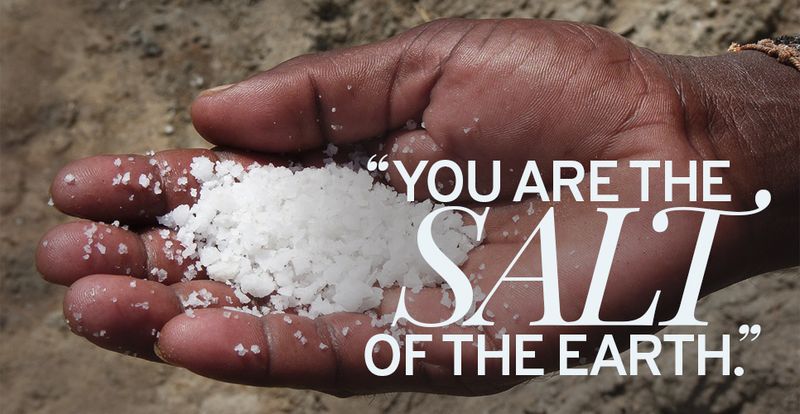
Jesus says that his followers should be the “salt of the earth.” We can think of salt as the good will and care that Jesus wants us to use to season our relationships with others in our families, neighborhood, and community. We shouldn’t try to overpower them with our own way of thinking or force them to be just like us, but rather seek to enhance their own God-given gifts and talents for the glory of Christ’s kingdom. Our “salt” should bring a welcome flavor of love, hope, and peace to the world around us.
“Have salt among yourselves, and be at peace with each another.” – Mark 9:50b